
Fintech Fran

Capital One acquires Brex
Capital One acquired Brex for about $5B. A lot of people called it a bad exit, but that is only true for those who entered at the peak in 2020-21. For almost everyone else, this was a good outcome.
Early employees and early investors did very well. Founders likely took close to $1B combined. Investors from 2017–2019 saw decent returns. Even 2020 investors made money in a very tough vintage. Late-stage 2021 investors mostly got their money back, which is better than many fintech deals from that period. This was not a Brex problem, it was a timing problem shared across tech.
For Capital One, this is a strategic move. Brex adds a modern expense, card, and software layer for startups and mid-market companies. This matters even more after Capital One’s acquisition of Discover last year. Discover brings the payments rails and Brex brings the distribution and software. I would definitely keep my eye on Capital One stock.
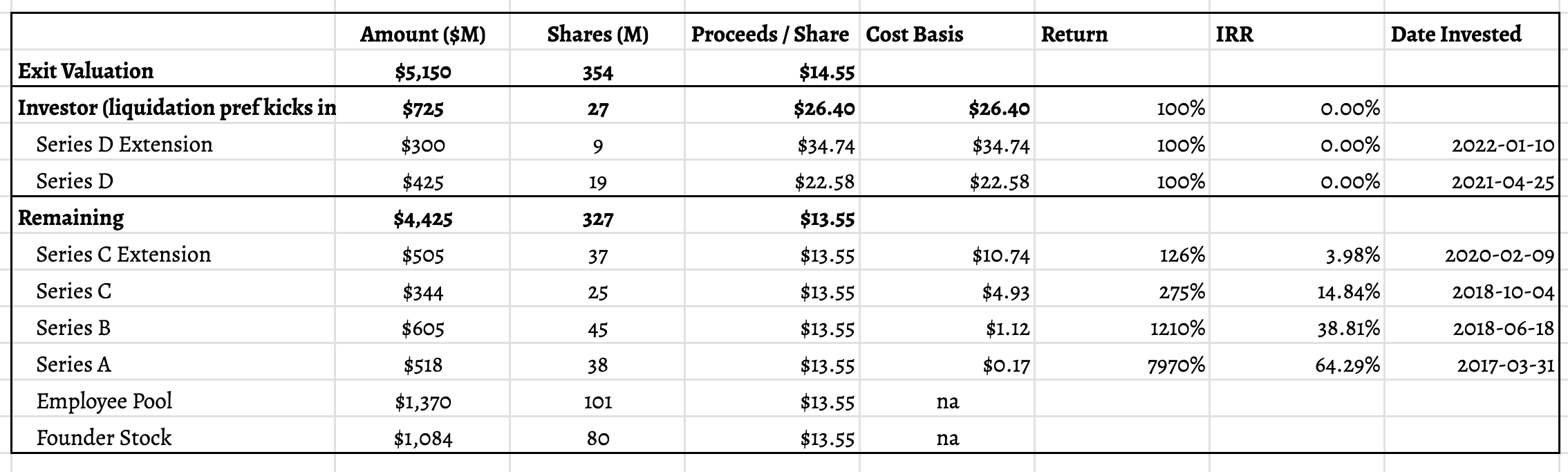
Estimated Brex returns
Revolut Mexico
Revolut officially launched in Mexico after almost five years of preparation (getting a banking license). Another competitor to a crowded neobank market.
Before launch, it had around 40,000 users in a trial phase and roughly 250,000 people on the waitlist, showing real early demand.
The first product live is a savings account that pays daily interest in Mexican pesos, with no withdrawal limits. Rates are 15.00% for the first 25,000 MXN, 7.50% from 25,000 to 1,000,000, and 5.00% above that. Funds are insured by IPAB up to roughly 3.4M MXN. For comparison, Nubank in Mexico offers 13.00% on the first 25,000 and 7.00% above.
Rates will attract attention, but Revolut’s edge is that people will be able to send, receive, or spend money outside Mexico. My main question is how incumbents respond now that Revolut is live with a full banking license.
Why everyone wants to be a bank?
Banks have cheaper capital than fintechs and nonbank lenders. That is why Affirm filed to become one.
Affirm filed to become an Industrial Loan Company, not a full bank. This structure lets it take FDIC insured deposits (this means cheaper customer deposits) without full bank holding company rules. Square uses the same setup.
Affirm funds loans (the cost of the capital they lend) at around 7 percent through capital markets. A fintech bank like SoFi funds closer to 4 to 5 percent using deposits. 2 percent difference at scale is a lot of money.
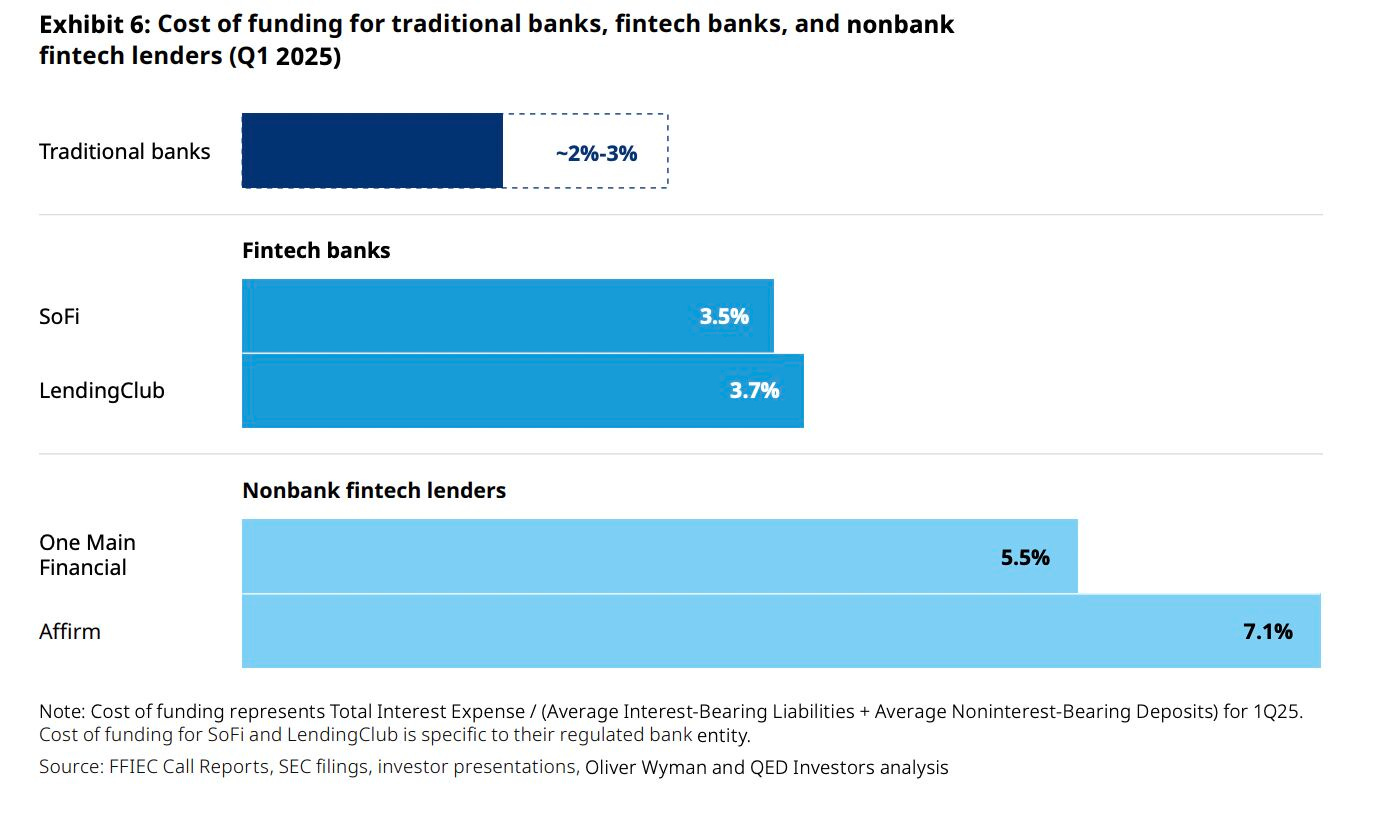
The timing matters. The FDIC has recently been more open to ILCs. PayPal has filed. Auto companies are getting approvals (Ford and GM). With the current pro business administration the window is open.
BNPL is becoming banking. Fintech lenders are done renting bank rails. They want to own them.
One on AI
Anthropic is raising around $20B at a $350B valuation. Coatue, GIC, Iconiq, and Sequoia are involved. Anthropic is focused on enterprise and being the safer AI option. Claude (Claude Cowork) is gaining a lot of attention from companies and consumers.
OpenAI is also raising again. SoftBank is in talks to invest another $30B as part of a round that could reach $100B and value the company at about $830B (overvalued). This comes just weeks after a $41B investment. OpenAI reportedly lost around $12B in the last quarter. With Gemini gaining market share with the Apple deal and many product releases I’m losing faith in Open AI as an great investment opportunity at this point.
Who will win? Anthropic, Open AI, Gemini, Grok, other? My guess Gemini thanks to their actual distribution.